Why Choose the Bachelor of Arts in Music at Bethel University?
If you love music and want it at the center of your education without narrowing to a single career track, the Bachelor of Arts in Music is built for you. It pairs a strong musical core in theory, history, analysis, and performance with the breadth and flexibility of a liberal arts degree, giving you room to pursue a second interest, a minor, or a path toward graduate study.
What makes the degree work is balance. You build real musicianship through applied lessons, ensembles, and performance, while a flexible slate of upper-level music electives and liberal arts coursework lets you shape the degree around your goals. You study closely with faculty who know you and your sound, in a program where music is the foundation and the possibilities stay open.
Music for Every Style, and a Stage to Match
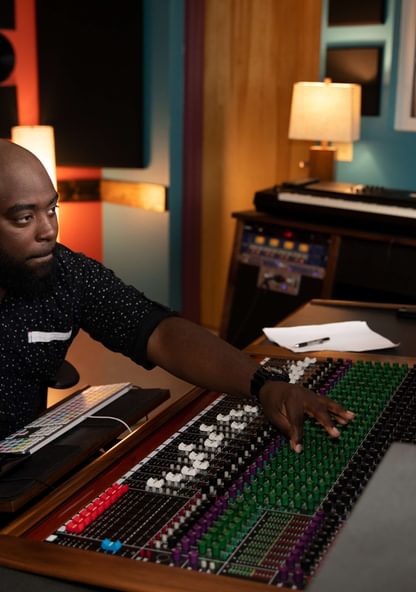
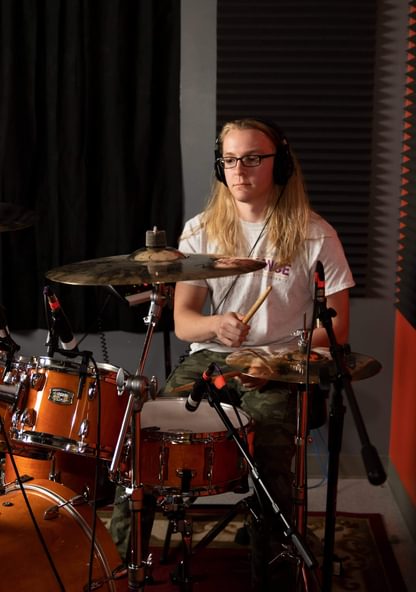
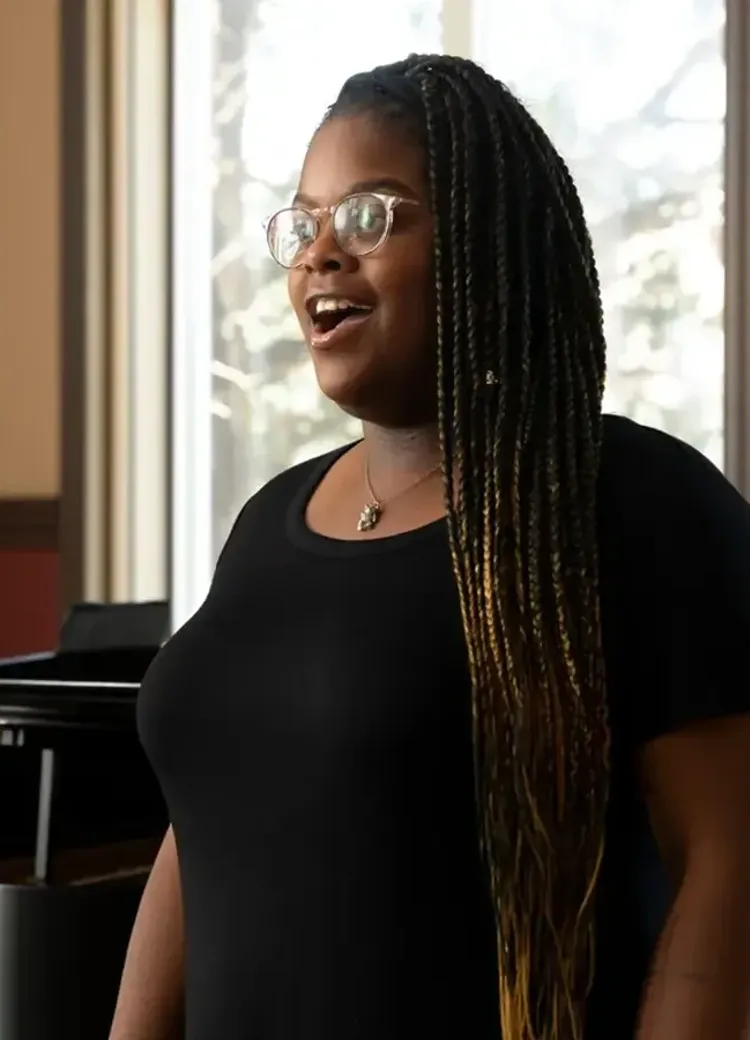
At Bethel, you will be surrounded by a wide range of music: classical, country, contemporary Christian, bluegrass, traditional, jazz, modern a cappella, and musical theatre. You will get to know the artists and creative teams behind those styles while learning how different audiences and markets shape their work.
You can also be part of the performances yourself. Through Bethel's Renaissance performing arts programs, Music students—and students in other majors—can pursue scholarships while participating in the Renaissance Choir, Rhythm Section, Bluegrass Band, Country Band, worship team, marching band, concert band, musical theatre program, or production team.
What You’ll Learn
In this program, you will learn:
- A strong foundation in music theory, from fundamentals through advanced harmony and counterpoint
- The ability to analyze musical form, structure, and post-tonal materials
- A broad knowledge of music history from the ancient world to the present
- Performance skill in your applied area, developed through private lessons and ensembles
- The versatility of a liberal arts education that complements your musical training
- The experience of preparing and presenting a junior project
- The musicianship to pursue performance, further study, or a music-adjacent career
- Musical versatility through exposure to a wide range of styles and performance opportunities
Courses You'll Take
These core courses anchor the Bachelor of Arts in Music:
MUS 101, Music Fundamentals
MUS 121, Music Theory I
MUS 122, Music Theory II
MUS 221, Music Theory III
MUS 327, Form and Analysis
MUS 301, Music History I
MUS 302, Music History II
MUS 381, Junior Project
Beyond these, you will complete applied lessons and class piano, ensembles totaling eight hours, eight hours in one applied music area, and additional upper-level music electives numbered 200 or above. All music majors complete Recital Hour and must pass a piano proficiency examination.
Career Possibilities
Performing Musician
Performs as a soloist or ensemble member in concert, recording, worship, or commercial settings.
Private Music Instructor
Teaches individual lessons on voice or an instrument, tailoring instruction to each student's goals.
Worship or Church Music Leader
Plans and leads music for worship, directing vocalists, instrumentalists, and congregational singing.
Music Director
Leads and shapes the musical direction of an ensemble, production, church, or organization.
Composer or Arranger
Writes and arranges original music for performers, productions, or media.
Arts Administrator
Supports the operations, programming, and promotion of a music or arts organization.
Graduate Student
Continues into advanced study in music or a related field, supported by a strong musical and liberal arts foundation.
Related Degrees and Programs
If you’re interested in this degree or program, here are others you might find intriguing.
See All