Why Choose Music Production at Bethel University?
Music Production is where artistry meets the studio. This degree trains you in the full craft of modern recording, from capturing a performance to mixing and mastering a finished track, while grounding you in the musicianship that separates a good engineer from a great one. You learn the gear, the software, and the ear, all at once.
It is also deeply hands-on and industry aware. You work in current recording technology and the Pro Tools standard, study live sound, MIDI, and learn how the music business actually runs, including publishing and music law. Whether you choose the Bachelor of Music for a stronger performance and theory core or the Bachelor of Science for a broader technical and industry focus, you graduate with a portfolio, real studio skills, and an understanding of the field you are entering.
From Studio to Stage
Bethel gives you an unusually wide range of music to work with. On any given week, you might encounter classical, country, contemporary Christian, bluegrass, traditional, jazz, modern a cappella, musical theatre, and more. Working across styles teaches you to listen closely, adapt your approach, and bring out what makes each performance compelling.
You can put those skills to work beyond the classroom through Bethel's Renaissance performing arts programs. Music Production students, along with students in other majors, can pursue scholarships while participating in the Renaissance Choir, Rhythm Section, Bluegrass Band, Country Band, worship team, marching band, concert band, musical theatre program, or production team. For production students especially, the production team offers opportunities to support live performances and gain experience working with performers and crews.
What You’ll Learn
In this program, you will learn:
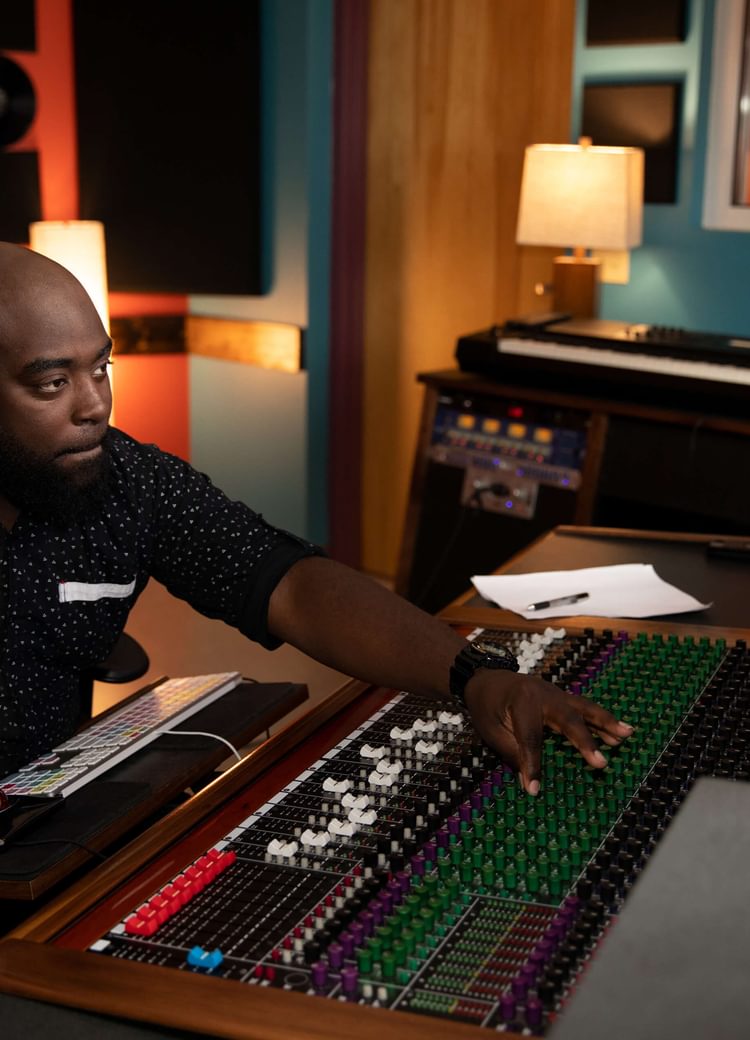
- The fundamentals of music production, including signal flow, microphone selection, signal processing, and mixing
- Proficiency in Pro Tools, the industry recording standard, from introduction through large, high-track-count sessions
- Advanced mixing and mastering skills, taking a multi-track recording from concept to completion
- A command of MIDI, sequencing, and virtual instruments in an advanced production environment
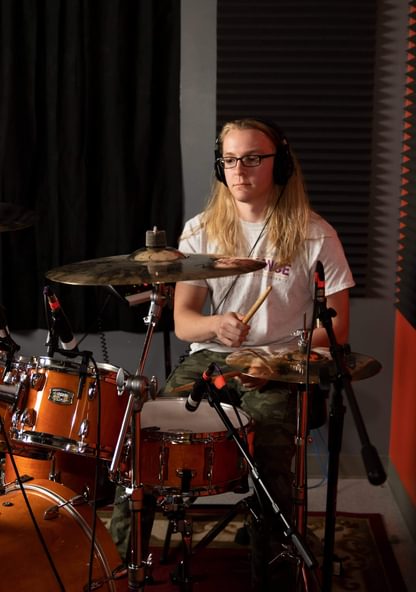
- Studio session recording techniques across a range of instruments
- Musical versatility through exposure to a wide range of styles and performance opportunities
- Live sound reinforcement skills using current technology
- The ability to create and edit audio for film and other media
- A working knowledge of the music industry, including publishing copyright law
- A foundation in music theory and history that strengthens every production decision
- A finished body of work through projects, an internship, and a senior project
Courses You'll Take
These are the main courses that define the major:
MUS 238, Survey of the Music Industry
MUS 261, Introduction to Music Production
MUS 262b, Introduction to Pro Tools
MUS 264b, Pro Tools Production I
MUS 265, Music Production and Sequencing
MUS 333, Principles of Mixing
MUS 334, Principles of Mastering
MUS 242b, Live Sound Engineering
MUS 330, Music Publishing
Beyond these, you will build core musicianship through the music theory and history sequence, complete additional production and industry electives such as Session Recording, Advanced Music Production, Audio for Media, and Music Industry Law, and finish with an internship and a senior project. All Music Production majors also complete ensembles, applied piano, and the piano proficiency requirement.
Career Possibilities
Audio Engineer
Captures, edits, and shapes recorded sound in a studio or live setting to achieve a polished result.
Recording and Mixing Engineer
Records sessions and blends multi-track audio into a balanced, finished mix.
Music Producer
Guides the creative and technical direction of a recording project from concept to completion.
Live Sound Engineer
Runs sound reinforcement for concerts, events, and venues, managing the audio that an audience hears.
Audio for Media Specialist
Creates and edits music and sound effects for film, television, radio, games, and other media.
Music Industry Professional
Works in areas such as publishing, touring, merchandising, or label operations, supported by production and business knowledge.
Related Degrees and Programs
If you’re interested in this degree or program, here are others you might find intriguing.
See All